

Key takeaways:
- Migrants have shaped Australian business with innovation, resilience and creativity
- Over 30% of small businesses are run by CALD entrepreneurs, often more likely to start businesses than locals
- Expats and migrants bring strong work ethic, community support, multilingual skills and creative thinking
- Many pivot from survival jobs to business ownership, overcoming language, legal and funding challenges
- Supporting CALD businesses boosts the economy, drives innovation and strengthens inclusion
Australia is one of the most multicultural countries in the world. People from many different cultures, languages and religions live, work and build futures here. A big part of that future is business – many migrants start their own companies, shops or services, helping shape the economy and bring new ideas to life. This article explores how migrants have influenced Australian business culture – and why their contribution still matters today.
Migrants and business: a quick look back
Migration and entrepreneurship have always gone hand in hand in Australia. From the early 1800s, newcomers helped grow the economy by starting small businesses. Former convicts, or emancipists, were among the first, opening farms, bakeries and workshops. Later waves of migrants continued the trend, each bringing new skills and business styles.
- Chinese migrants in the gold rush ran market stalls, grocery shops and cafés.
- After WWI and the Russian Revolution, Eastern Europeans opened tailoring shops, bakeries and small factories.
- Post-WWII migrants from Italy, Greece and Vietnam launched cafés, trades, food stores and family businesses.
Each wave of migration brought a fresh cultural impact, adding colour, creativity and resilience to local economies.
What CALD means – and what it doesn’t
CALD stands for Culturally and Linguistically Diverse – the CALD meaning is mostly used in government and official contexts to describe people from non-English-speaking or multicultural backgrounds.
Today, people from CALD backgrounds make up a large part of Australia’s population:
- 1 in 4 Australians was born overseas
- Sydney is home to the highest number of overseas-born residents
- Over 30% of small business owners have a CALD background
- Migrants are more likely to start a business than Australian-born locals
However, many people don’t personally identify with the term “CALD.” It can feel cold, technical or too broad. Most prefer to be recognised by their community – like Vietnamese, Lebanese, Indian or Chilean – rather than a label. Using respectful and inclusive language helps businesses build stronger connections, especially in diverse areas.
The cultural impact on business
People from a CALD background bring more than just labour – they bring unique perspectives, experiences and determination. Starting over in a new country is not easy, and many use their personal strength, cultural knowledge and support networks to build something meaningful. This diversity of skills and mindsets strengthens Australia’s business scene.
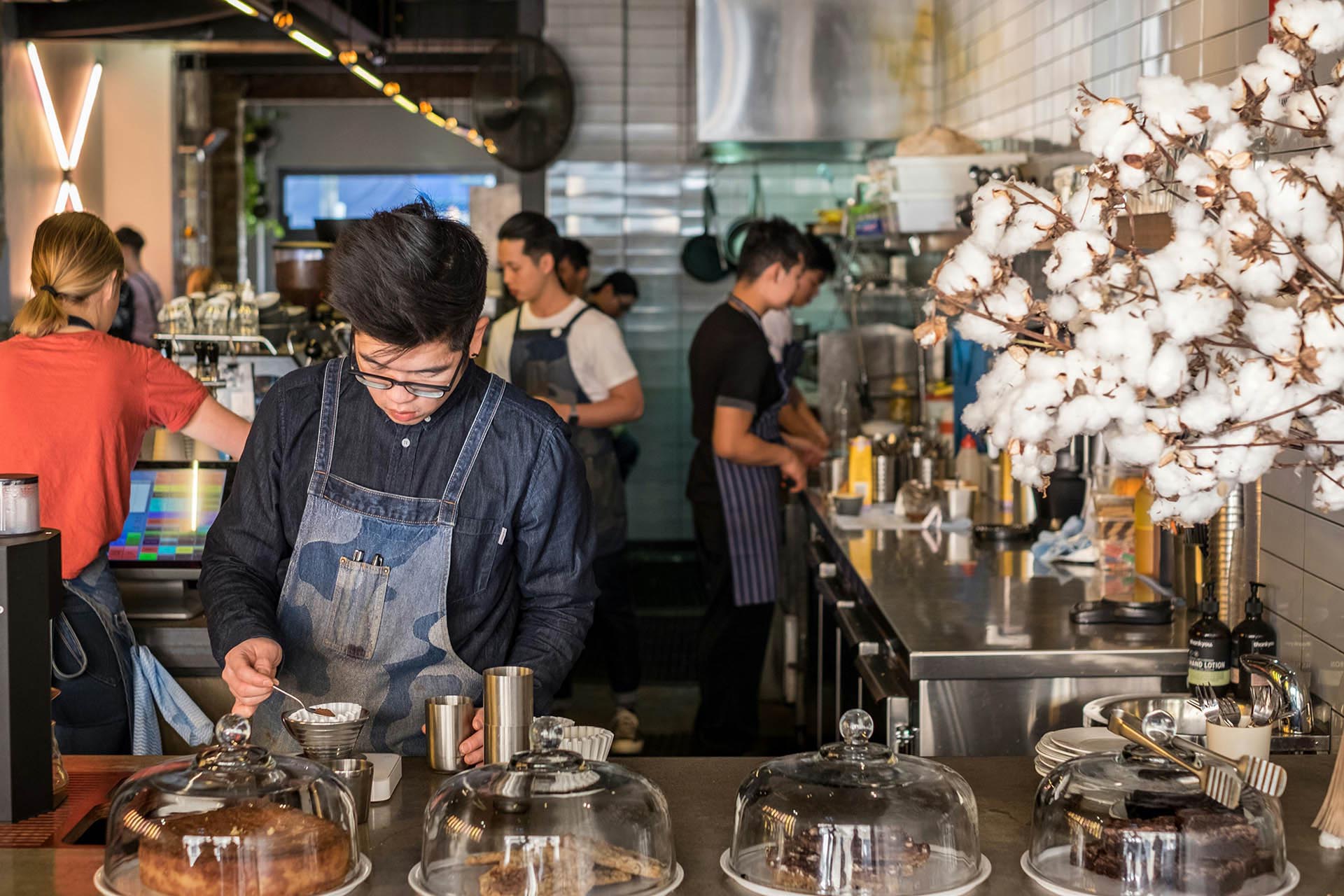 Key advantages many migrant business owners bring include:
- Strong work ethic and determination, often built from overcoming early struggles
- Support from family and community, offering hands-on help and moral support
- Experience from previous businesses, whether formal or informal
- Multilingual skills, which help them connect with more customers
- Creative thinking, shaped by adapting to new environments
These cultural influences have helped shape a more dynamic and innovative business culture in Australia.
Career pivoters: from survival jobs to business owners
Not all migrants arrive with a business plan in mind. Many begin with whatever job they can find – cleaning, hospitality, factory work – just to make ends meet. But over time, they often become a career pivoter and start their own businesses. Some do it out of choice. Others do it because they feel stuck in low-paying or unstable jobs.
 Reasons for career change often include:
Push factors:
- Losing a job or not being treated fairly
- Struggling to find work in their profession
- Facing language or qualification barriers
Pull factors:
- Wanting more freedom and control over work
- Seeing a gap in the market
- Using skills they already have
For many, becoming a business owner is a way to create stability, independence, and a better future for their family.
What kinds of businesses do migrants start?
Migrants start businesses in many areas – from restaurants and cafés to construction, personal care, childcare, tutoring and transport services. These businesses often serve both their own communities and the broader public, helping to bridge cultures and fill service gaps.
However, even successful migrant entrepreneurs face real challenges:
- Understanding business laws and tax rules can be difficult without clear guidance
- Getting loans or grants is harder without local credit history or contacts
- Language barriers make paperwork and official communication stressful
- Lack of mentors or local networks makes it harder to get advice
- Navigating complex systems like licensing or permits takes time and patience
With the right support, many of these barriers can be reduced – helping migrant-owned businesses grow and benefit the wider economy.
The future is multicultural: why CALD businesses matter
Migrant-owned businesses are not just a reflection of diversity – they are a source of strength and opportunity. They serve a wide range of customer needs, create jobs, bring in new ideas and help Australia stay connected to international markets.
 To support CALD entrepreneurs, we need to:
- Use clear and simple English in business advice and forms
- Provide translated materials or interpreters where needed
- Make information about starting and growing a business easier to find
- Involve people from multicultural backgrounds in decision-making
- Offer training that includes both business skills and cultural understanding
By supporting migrant businesses, Australia strengthens its economy and builds a more connected, vibrant community for everyone.
Migrant business owners continue to shape Australia’s economic future in powerful ways. They bring new skills, global connections, fresh ideas and strong community values. With the right support, they can overcome challenges and create even more impact – not just for their own communities, but for all Australians. Their success is part of what makes this country stronger, more inclusive and full of opportunity.
Team up with other migrant-owned businesses in our multicultural hub. We offer support and understand the challenges of starting a business in Australia as a migrant.
Become a migrapreneur